LLM evaluation · public code
When retrieval helps—and when it hurts
An evaluation harness for asking whether retrieval improves the answer, and what it costs to get there.
The question
Adding a retriever to an LLM introduces another place for a system to succeed or fail. A good answer can hide poor retrieval, and relevant evidence does not guarantee a correct answer.
What I built
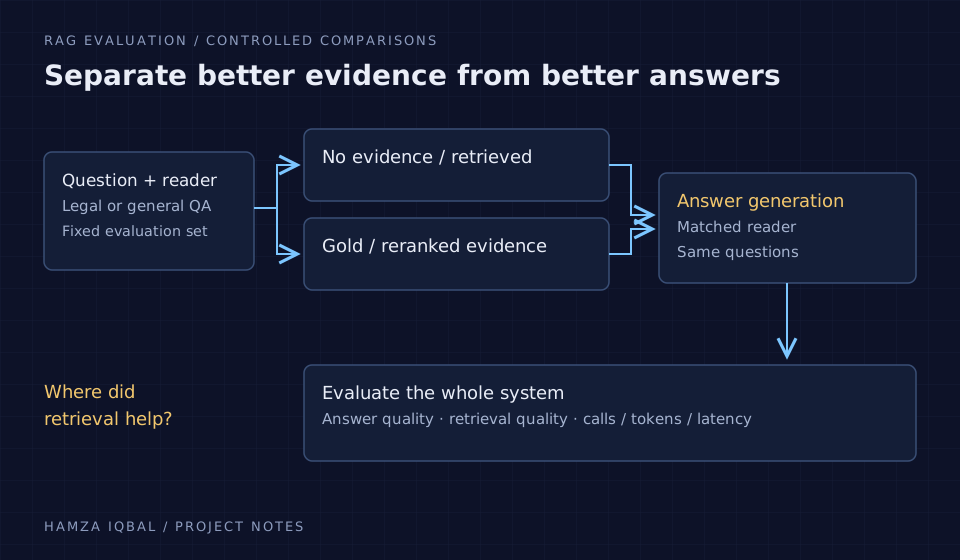
I developed a multi-model harness for legal and general question answering, with controlled evidence conditions and per-question traces. It separates the evidence a reader receives from the quality of the answer it produces.
- Compare no context, retrieved context, gold evidence and reranked evidence under matched evaluation conditions.
- Inspect answer quality alongside retrieval metrics, model calls, tokens and latency.
- Train and evaluate evidence rerankers under matched conditions.
Why it matters
The useful output is a diagnosis: whether the bottleneck is finding evidence, selecting it, or using it. That makes model and retrieval choices easier to justify.
← All projects